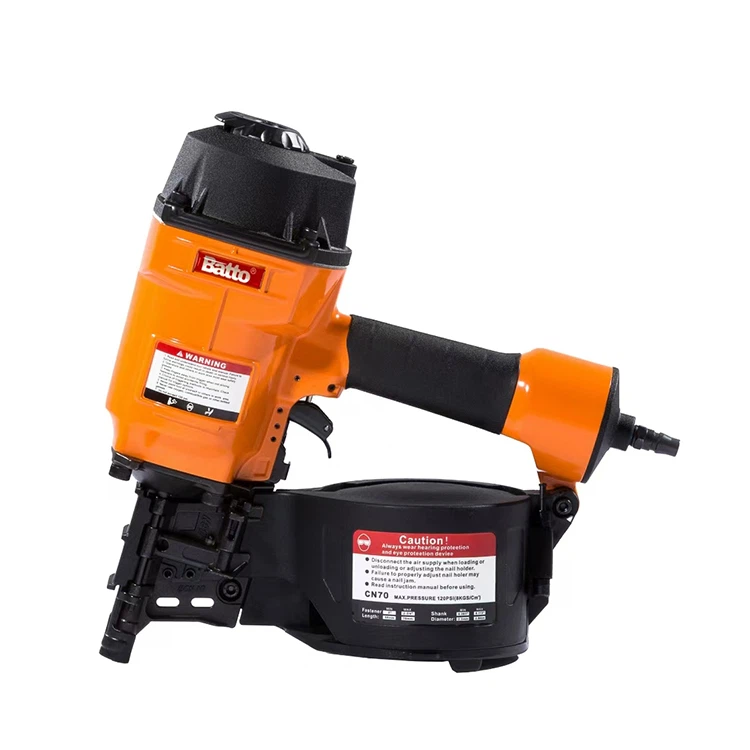
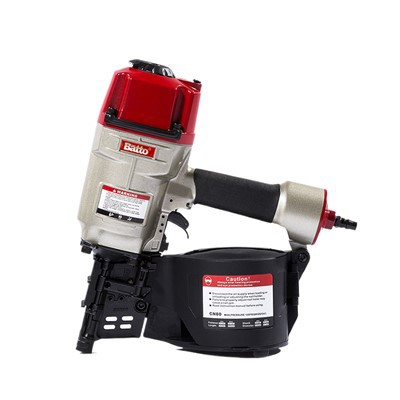
In the realm of construction and woodworking, nail guns are indispensable tools that significantly enhance efficiency and precision. Among the various types of nail guns available, pneumatic nail guns for siding stand out with distinct features and applications. As a supplier of pneumatic nail guns for siding, I am well - versed in the differences between these specialized tools and other nail guns.
Power Source
One of the most fundamental differences lies in the power source. Pneumatic nail guns, including those for siding, rely on compressed air to drive nails into materials. This compressed air is typically supplied by an air compressor. The advantage of this power source is its consistent and reliable performance. The force exerted by the compressed air can be precisely regulated, allowing for a more controlled nail - driving process.
In contrast, other nail guns may use different power sources. For example, cordless nail guns are powered by rechargeable batteries. These are highly portable and can be used in areas where access to an air compressor or electrical outlet is limited. However, the power output of battery - powered nail guns may vary depending on the battery's charge level. Gas - powered nail guns, on the other hand, use a small amount of combustible gas to generate the force needed to drive nails. They offer the advantage of high power and portability but may require more maintenance due to the combustion process.
Nail Type and Size
Pneumatic nail guns for siding are designed to work with specific types and sizes of nails. Siding nails are usually longer and thinner than nails used in other applications. They are typically made of galvanized or stainless steel to resist corrosion, which is crucial as siding is often exposed to the elements. The nails are often collated in a coil or strip form, allowing for quick and continuous feeding.
Other nail guns, such as framing nail guns, use larger and thicker nails. Framing nails are designed to provide strong structural support, so they need to be able to penetrate deep into the wood and hold it firmly together. Finish nail guns, on the other hand, use smaller nails that are less visible, making them ideal for finishing work such as installing trim and molding.
Application and Use
The primary application of a pneumatic nail gun for siding is, as the name suggests, siding installation. Siding is an important exterior component of a building, and a proper installation is essential for both aesthetic and functional reasons. Pneumatic siding nail guns can quickly and accurately drive nails into the siding material, whether it's vinyl, wood, or fiber cement. They can also be adjusted to drive nails at the correct depth, ensuring a smooth and professional finish.
Framing nail guns are used for heavy - duty construction tasks such as building the frame of a house. They need to be able to drive nails through thick lumber quickly and with a lot of force. Finish nail guns are used for more delicate work. They are often used to attach baseboards, crown molding, and other decorative elements. These nail guns are designed to leave a small hole that can be easily filled and painted over, resulting in a seamless finish.
Design and Ergonomics
Pneumatic nail guns for siding are often designed with the user's comfort and the specific requirements of siding installation in mind. They usually have a lightweight and ergonomic design, allowing for easy handling during long - term use. Many siding nail guns also have features such as adjustable depth control, which allows the user to set the depth at which the nail is driven. This is important as different siding materials may require different nail depths.
Framing nail guns are typically heavier and more robust due to the high - force requirements of framing work. They may have a larger grip and more substantial trigger mechanism to withstand the repeated high - impact use. Finish nail guns are usually smaller and more delicate in design, allowing for precise control in tight spaces.
Safety Features
All nail guns come with safety features, but the specific features may vary depending on the type of nail gun. Pneumatic nail guns for siding often have a contact trip or sequential trip mechanism. A contact trip mechanism allows the user to drive nails quickly by simply holding the trigger and pressing the nose of the nail gun against the work surface. A sequential trip mechanism, on the other hand, requires the user to press the nose of the nail gun against the work surface and then pull the trigger, which can reduce the risk of accidental firing.
Framing nail guns may have additional safety features such as a trigger lock to prevent accidental firing during transport or storage. Finish nail guns also have safety mechanisms to prevent misfires, but they may be more focused on preventing damage to the delicate finish work.
Performance and Efficiency
In terms of performance, pneumatic nail guns for siding offer high speed and accuracy. They can drive nails quickly and consistently, which is essential for large - scale siding projects. The use of compressed air ensures a reliable power source, and the adjustable depth control allows for a precise installation.


Battery - powered nail guns may offer similar speed but may suffer from a decrease in performance as the battery drains. Gas - powered nail guns can provide high power but may require more time for warm - up and may be affected by environmental conditions such as temperature and altitude.
Cost and Maintenance
The cost of a pneumatic nail gun for siding can vary depending on the brand, features, and quality. Generally, they are more affordable than high - end gas - powered nail guns but may be more expensive than basic battery - powered models. However, the long - term cost of using a pneumatic nail gun for siding may be lower as the cost of compressed air is relatively inexpensive compared to the cost of replacing batteries or gas cartridges.
Maintenance of pneumatic nail guns for siding is relatively straightforward. Regular cleaning and lubrication of the moving parts are required to ensure smooth operation. The air compressor also needs to be maintained, including draining the moisture and changing the filters. Other nail guns may have different maintenance requirements. Battery - powered nail guns need to have their batteries properly charged and maintained, while gas - powered nail guns require more complex maintenance due to the combustion process.
Our Product Offerings
As a supplier of pneumatic nail guns for siding, we offer a range of high - quality products. Our Heavy Duty Coil Siding Nailer is designed for professional use, with a durable construction and adjustable depth control. It can handle a variety of siding materials and is ideal for large - scale projects.
We also have the CN90 Pneumatic Coil Nail Gun for Roofing and Fencing, which is a versatile tool that can be used for both siding and other applications such as roofing and fencing. This nail gun offers a high - speed performance and is easy to operate.
For those in need of a nail gun for pallet construction, our Coil Nail Gun for Pallet is a great choice. It is designed to drive nails quickly and efficiently into pallet wood, ensuring a strong and reliable construction.
Conclusion
In conclusion, pneumatic nail guns for siding have several distinct differences from other nail guns in terms of power source, nail type and size, application, design, safety features, performance, cost, and maintenance. These differences make them uniquely suited for siding installation. If you are in the market for a pneumatic nail gun for siding or other related nail guns, we invite you to contact us for more information and to discuss your specific requirements. We are committed to providing high - quality products and excellent customer service to meet your construction needs.
References
- Construction Equipment Handbook, various editions
- Woodworking Magazine articles on nail gun technology
- Manufacturer's manuals for different types of nail guns