As a coil nailer supplier, ensuring the quality and performance of our products is of utmost importance. Testing a new coil nailer is a comprehensive process that involves multiple steps to guarantee it meets the highest standards and customer expectations. In this blog, I'll walk you through the essential steps of testing a new coil nailer.
Pre - testing Preparation
Before we start the actual testing, there are several preparatory steps. First, we need to carefully examine the physical appearance of the coil nailer. Check for any visible damages, such as scratches, dents, or misaligned parts. A well - made coil nailer should have a smooth finish and all components should fit together properly.
Next, we gather all the necessary accessories and nails. For our tests, we often use 15 Degree Coil Framing Nails. These nails are commonly used in framing applications, and using them in the test allows us to simulate real - world working conditions accurately. We also need to prepare the appropriate air compressor if it's a pneumatic coil nailer or ensure the battery is fully charged for a cordless model.
Safety Checks
Safety is our top priority. We always wear appropriate personal protective equipment (PPE), including safety glasses, ear protection, and gloves. We also make sure the work area is clear of any obstacles and that there are no bystanders in the vicinity.
We check the safety features of the coil nailer. Most modern coil nailers are equipped with a contact trip or a sequential trip safety mechanism. The contact trip allows for rapid firing when the nose of the nailer is pressed against the work surface, while the sequential trip requires the trigger to be pulled and the nose to be pressed against the surface in a specific order. We test these mechanisms to ensure they are functioning correctly and providing the necessary safety protection.
Functionality Testing
Firing Mechanism
The firing mechanism is the heart of the coil nailer. We start by loading the nail magazine with the 15 Degree Coil Framing Nails. For a pneumatic nailer, we connect it to the air compressor and set the air pressure according to the manufacturer's recommendations. For a cordless nailer, we insert the fully - charged battery.
We then test the firing action. We fire a series of nails into a test board. The nails should be driven smoothly and consistently into the board. We pay attention to the depth of drive. The nails should be driven to the appropriate depth, neither too shallow nor too deep. If the nails are not driven correctly, it could indicate problems with the air pressure (for pneumatic nailers), the battery power (for cordless nailers), or a mechanical issue within the firing mechanism.
Magazine Function
The magazine is responsible for feeding the nails to the firing chamber. We test the magazine's ability to feed nails smoothly. We fire multiple nails in quick succession to ensure that the nails are fed one after another without jamming. A jammed magazine can cause significant downtime on a job site, so it's crucial that it functions properly.
We also check the magazine's capacity. The nailer should be able to hold the specified number of nails without any issues. If the magazine fails to hold the correct number of nails or if the nails don't feed properly, we need to investigate and make the necessary adjustments or repairs.
Performance Testing
Driving Force
The driving force of the coil nailer determines how well it can penetrate different materials. We test the nailer's driving force by using it on various types of wood, including softwoods like pine and hardwoods like oak. We also test it on other materials such as plywood and oriented strand board (OSB).
The nailer should be able to drive the nails into these materials with ease. If the nails don't penetrate fully or if they bend during driving, it could mean that the driving force is insufficient. We can adjust the air pressure (for pneumatic nailers) or check the battery and motor (for cordless nailers) to improve the driving force.
Accuracy
Accuracy is another important aspect of a coil nailer's performance. We set up a target board with marked areas and fire nails at specific points. The nails should hit the intended targets as accurately as possible. A nailer with poor accuracy can lead to wasted nails and a less - than - professional finish on the job.
We also test the nailer's ability to drive nails at different angles. Some applications require nails to be driven at an angle, so the nailer should be able to perform this task accurately.
Durability Testing
To ensure the long - term reliability of the coil nailer, we conduct durability tests. We simulate continuous use by firing a large number of nails over an extended period. For example, we might fire several thousand nails in a single test session.
We also subject the nailer to different environmental conditions. We test it in a dusty environment to see how well it resists dust ingress, which can cause internal components to wear out prematurely. We also test it in a humid environment to check for any signs of corrosion.


Testing Specific Models
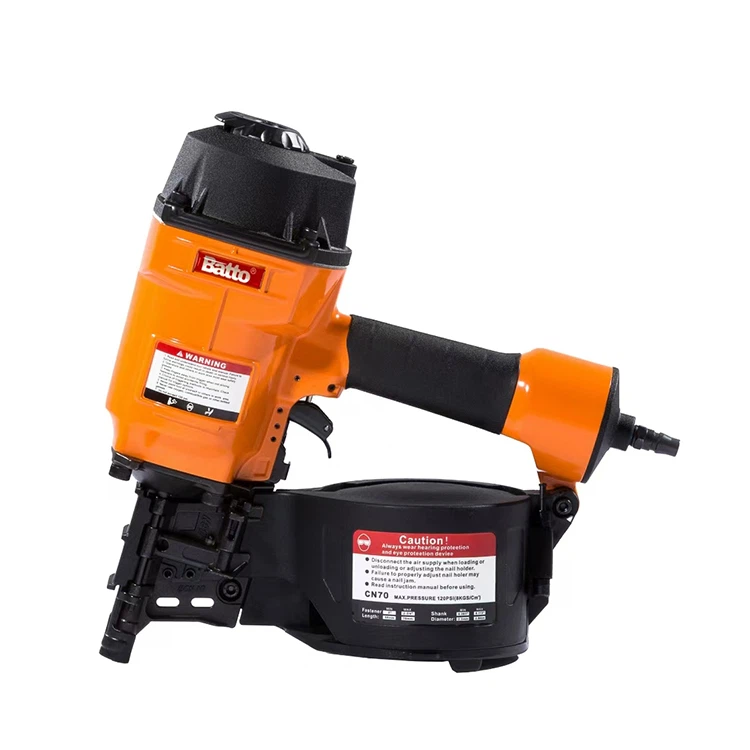
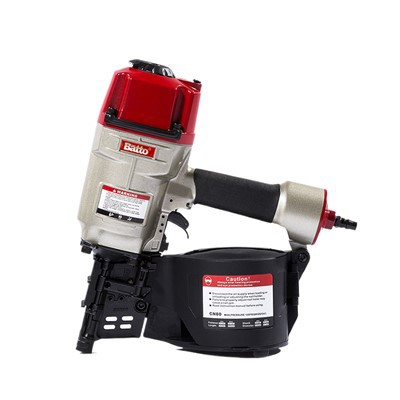
Let's take a look at two of our popular models: the CN100 Pneumatic Coil Siding Nailer Gun for Siding and Framing and the CN70 3 4 Inch Pneumatic Cordless Coil Framing Roofing Nailer.
For the CN100, which is designed for siding and framing, we focus on its ability to drive nails into different types of siding materials, such as vinyl, fiber cement, and wood. We test its accuracy in driving nails along the edges of the siding to ensure a clean and professional look.
The CN70, on the other hand, is a cordless nailer suitable for roofing and framing. We test its battery life by continuously firing nails until the battery runs out. We also test its ability to drive nails into roofing materials like asphalt shingles and plywood.
Conclusion
Testing a new coil nailer is a meticulous process that involves a series of checks and evaluations. From safety and functionality to performance and durability, every aspect of the nailer is carefully examined to ensure it meets our high - quality standards.
As a coil nailer supplier, we are committed to providing our customers with reliable and high - performing products. If you are in the market for a coil nailer, whether it's for a small DIY project or a large - scale construction job, we have the right product for you. Our testing process ensures that you get a nailer that will serve you well for years to come.
If you are interested in learning more about our coil nailers or would like to discuss your specific needs, please feel free to reach out to us. We are always ready to assist you with your purchasing decisions and answer any questions you may have.
References
- Coil Nailer Manufacturer's Manuals
- Industry Standards for Nailer Testing