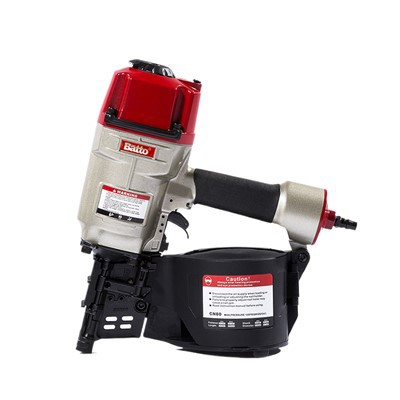
Hey there! As a supplier of Pneumatic Coil Siding Nail Guns, I'm super stoked to dive into the topic of what the nail penetration ability of these bad boys is all about.
Let's start by getting a basic understanding of what a pneumatic coil siding nail gun is. It's a tool that uses compressed air to drive nails into various materials, and the nails are arranged in a coil, which allows for a larger number of nails to be loaded at once compared to stick - type nailers. This makes it a time - saver on the job site, especially for siding projects where you've got a lot of nailing to do.
Factors Affecting Nail Penetration Ability
Air Pressure
The air pressure you set on your pneumatic coil siding nail gun is a huge factor in determining how well the nails penetrate. Most nail guns work within a specific air pressure range. If the pressure is too low, the nails might not go in all the way, leaving them sticking out or only partially embedded. On the other hand, if the pressure is too high, it could cause the nails to blow through the material or even damage the surface.
For example, when nailing into softwood like pine, you might be able to get away with a lower air pressure setting, say around 70 - 80 PSI (pounds per square inch). But if you're working with hardwoods like oak or maple, you'll probably need to crank up the pressure to 90 - 100 PSI to ensure proper penetration.
Nail Size and Type
The size and type of nails you use also play a major role. Longer and thicker nails generally require more force to penetrate. For siding work, common nail sizes range from 1 - 1/2 inches to 2 - 1/2 inches. A 1 - 1/2 - inch nail will be easier to drive into the material compared to a 2 - 1/2 - inch one.
There are also different types of nails, such as smooth - shank and ring - shank nails. Ring - shank nails have ridges around the shank, which provide better holding power. However, they can be a bit more difficult to drive in because of the increased friction. So, you might need to adjust the air pressure accordingly when using ring - shank nails.
Material Density
The density of the material you're nailing into is another key factor. Soft materials like vinyl siding are much easier to penetrate than dense materials like concrete or brick. When working with vinyl siding, the nail gun can drive the nails in with relatively little force. But if you're trying to attach something to a concrete block, you'll need a nail gun specifically designed for that purpose and a much higher air pressure.
Real - World Applications
Siding Installation
In siding installation, the nail penetration ability is crucial. You want the nails to be firmly embedded in the sheathing behind the siding to ensure a secure and long - lasting installation. If the nails don't penetrate deeply enough, the siding might come loose over time, especially in high - wind areas.


For vinyl siding, a properly adjusted pneumatic coil siding nail gun can drive the nails in smoothly, leaving a clean and professional finish. The nails should be flush with the surface of the siding or slightly recessed. With fiber - cement siding, which is a bit more dense, you may need to make sure the air pressure is set correctly to avoid cracking the siding while still getting good penetration.
Fencing
When building a fence, the nail penetration ability helps in securing the fence boards to the posts. Whether you're using wood or composite materials, the nails need to hold the boards in place tightly. A good pneumatic coil siding nail gun can make quick work of this task, driving the nails into the posts with ease and providing a strong connection.
Comparing with Other Nail Guns
Coil Nail Gun for Pallet
If you check out the Coil Nail Gun for Pallet, it's designed for a different kind of job. Pallet building usually involves thicker and more robust materials, so the nail penetration ability of this type of nail gun is optimized for that. It might be able to handle larger nails and higher air pressures to drive them into the tough wood used in pallets. In comparison, our pneumatic coil siding nail gun is more focused on precision and working with thinner materials like siding.
Pneumatic Roofing Coil Nailer Gun
The Pneumatic Roofing Coil Nailer Gun is used for roofing applications. Roofing materials often have different requirements for nail penetration. For example, asphalt shingles need the nails to be driven in at the right depth to prevent water leakage. Our siding nail gun is designed with a different set of parameters to work well with siding materials, but both types of nail guns rely on pneumatic power to drive nails.
CN90 Pneumatic Coil Nail Gun for Roofing and Fencing
The CN90 Pneumatic Coil Nail Gun for Roofing and Fencing is a versatile tool that can be used for both roofing and fencing. It has its own unique nail penetration characteristics. While it can handle a wide range of materials, our pneumatic coil siding nail gun is more specialized for siding work, which means it can provide better control and accuracy when nailing siding materials.
Tips for Optimal Nail Penetration
Pre - testing
Before starting a big project, it's a good idea to do some pre - testing. Take a scrap piece of the same material you'll be using and try different air pressure settings and nail sizes. This way, you can find the perfect combination for your specific job.
Maintenance
Regular maintenance of your pneumatic coil siding nail gun is essential. Keep the gun clean and lubricated according to the manufacturer's instructions. A dirty or poorly maintained gun might not operate at its full potential, which can affect the nail penetration ability.
Operator Skill
The skill of the operator also matters. Holding the nail gun at the correct angle and applying the right amount of pressure when pulling the trigger can make a big difference in how well the nails penetrate. Make sure the operator is properly trained to use the nail gun.
Conclusion
The nail penetration ability of a pneumatic coil siding nail gun is influenced by several factors, including air pressure, nail size and type, and material density. By understanding these factors and following the tips I've shared, you can ensure that your nail gun performs at its best.
If you're in the market for a high - quality pneumatic coil siding nail gun or have any questions about nail penetration ability or our products, don't hesitate to reach out. We're here to help you find the perfect tool for your project and ensure that you get the best results. Let's start a conversation about your procurement needs, and we can work together to make your project a success.
References
- "Pneumatic Tools Handbook" - A comprehensive guide on the operation and maintenance of pneumatic tools.
- Manufacturer's manuals for pneumatic coil siding nail guns, which provide detailed information on air pressure settings and nail compatibility.